
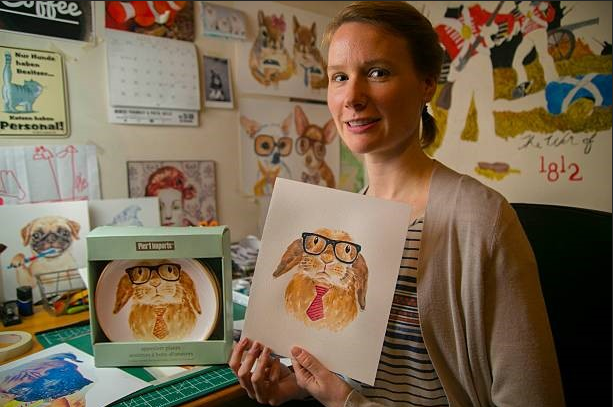
A watercolor portrait can look perfect in a preview and still feel unexpectedly different once it reaches the wall. Sometimes the issue is obvious, but often it is something harder to pinpoint.
The artwork may seem too quiet, too dominant, or simply not as natural in the room as you imagined. That is where choosing the right watercolor portrait size becomes more intriguing than it sounds.
The decision is not always about going larger or smaller, and the most suitable option is not necessarily the one you would pick first. So, what makes one size feel instantly right while another misses the mark? The answer often comes down to details that are easy to overlook until the portrait is already framed and displayed.
Measure the exact wall area before comparing portrait dimensions.
Begin by measuring the exact section where the portrait will hang. Record the width and height, then note anything that interrupts the area, such as windows, doors, shelving, sconces, molding, or switches.
These features define the true display zone rather than the total wall size. Also consider how much open space should remain around the artwork so it does not feel crowded by nearby architectural elements.
Once you know the practical boundaries, compare them with the dimensions offered by the artist. Choosing a watercolor portrait size based on accurate measurements gives you a clear starting point and helps narrow your options before you consider style or composition.
Furniture can help establish the visual scale of the artwork.
A portrait above a sofa, bed, console, desk, or sideboard should feel proportionate to the piece beneath it. A narrow portrait over a long sofa may seem isolated, while a very wide frame over a compact console can overpower the setup.
Look at the furniture grouping as a whole. Lamps, books, plants, photographs, and handmade prints can all affect the amount of visual weight already present.
The right watercolor portrait size should sit comfortably within that arrangement, creating a sense of continuity between the artwork and the furniture without making either one feel dominant.
The number of subjects affects how much room the composition needs.
A single-person portrait or a dog portrait often works well at a smaller scale because the artist can concentrate the composition on a single focal point. A group portrait needs more room to separate figures and give each subject enough visual presence.
The same applies when the commission includes full-body poses, decorative objects, scenery, or detailed surroundings. More elements require more space for the composition to remain organized.
For this reason, the chosen dimensions should reflect the amount of visual information the artist needs to arrange. The objective is to avoid a cramped composition while keeping the artwork appropriate for the intended setting.
Orientation determines how the portrait uses height and width.
Vertical formats often suit individual figures, standing poses, pets, and narrow wall sections. Horizontal formats are usually better for families, multiple pets, seated groups, or broader scenes. Square compositions can work well for centered subjects and contemporary displays.
The source image should also guide the format. A wide family photograph may translate more naturally into a horizontal piece, while a close-up face may suit a vertical composition.
This flexibility is especially useful with custom illustrations, where the layout can often be adapted before the final artwork is created. Choosing the orientation early helps the artist make better use of the available paper.
Consider how far away people will usually be when they see the portrait.
In a hallway, bedroom, or small office, viewers tend to stand relatively close. In these spaces, a modest format can still feel engaging because brushwork, expression, and subtle watercolor details remain easy to appreciate.
In a large living room, dining area, or open-plan space, the artwork may be seen from several feet away. A larger watercolor portrait size can give the subject a stronger presence across that distance.
Focus on the room’s normal sightlines, such as the view from a doorway, seating area, or dining table. This helps you choose dimensions based on how the portrait will actually be experienced rather than how it appears only at close range.
The paper size and the finished framed size are two different measurements.
Matting adds space around the watercolor, while the frame creates an additional outer border. Together, they can increase the final dimensions considerably.
Before ordering, confirm whether the listed measurements refer to the painted area, the full sheet of paper, or the completed framed piece. If framing will be arranged separately, ask for an estimated mat width and frame profile so you can anticipate the final size.
Matting can also give a smaller portrait greater presence without changing the original artwork. When comparing watercolor portrait size options, keep the original paper dimensions and the final display dimensions separate to avoid confusion.
A temporary mockup can help you see whether your preferred dimensions work in practice.
Use painter’s tape to outline the proposed size on the wall, or cut a piece of kraft paper or cardboard to match the expected finished dimensions. Place it in position and view it during normal use of the room.
If you are comparing two options, test them separately and photograph each from the same viewpoint. This makes differences in scale easier to judge.
The exercise can also help narrow down different watercolor ideas for a single location. Instead of relying only on numbers, you get a realistic sense of how much visual presence the finished portrait will have before placing the commission.
Choosing the right watercolor portrait size is less about following one universal rule and more about understanding how the artwork will function in your specific space. Wall dimensions, furniture scale, composition, orientation, viewing distance, and framing each influence the final result in a different way.
Looking at these factors separately can help you avoid a portrait that feels undersized, oversized, or visually disconnected from the room. A simple mockup before ordering can make the decision even clearer. When scale is considered early, the finished watercolor is far more likely to feel balanced, intentional, and naturally suited to the place where it will be displayed.
Explore custom watercolor artwork and creative inspiration at Brown Chameleon.
Can a small watercolor portrait still work on a large wall?
Yes. A smaller piece can work well when it is paired with generous matting, grouped with other artwork, or placed in a more intimate section of the wall.
Should portrait size change depending on ceiling height?
It can. Taller ceilings may support larger or vertically oriented artwork, while lower ceilings often benefit from more compact proportions that do not make the room feel compressed.
Is it better to size the portrait before choosing the frame?
Usually, yes. Start with the artwork’s dimensions, then choose a mat and frame that complement the piece while staying within the display area.
Can lighting affect how large a portrait appears?
Yes. Strong spotlighting can make a smaller piece feel more prominent, while dim or uneven lighting can reduce the visual impact of even a larger portrait.
Should watercolor portraits in a gallery wall all be the same size?
No. Mixing sizes can create a more natural arrangement, provided the spacing, frame styles, and overall layout feel coordinated.